July 12, 2012

At sea, the dreaded C-word

Almost all seamen above a certain ago who are reading this carry a cancerous time bomb in their lungs- the ingredients of a disease that, if it explodes, will kill them quickly, in a year or two. Mesothelioma is an incurable cancer. Many of you-and I- may have also brought its chief ingredient home, clinging to our clothing and our suitcases. We may have unwittingly exposed our families to painful death.  The ingredient-asbestos- has been present in large quantities on almost all the ships we have worked on. Not that a large amount is required to kill you; a few fibres and minute particles will do that just as efficiently.

The young are not immune to it either, because asbestos- banned in fifty odd countries- is freely used in many others even today, including in India and China, the world's biggest shipbuilder. Despite amendments to SOLAS- that came into effect last year- banning its use in shipbuilding. Despite WHO's guidelines. Despite recommendations from medical experts across the world. Despite nobody disputing that exposure to asbestos can cause Mesothelioma. Despite the ILO saying that 100,000 die each year due to asbestos related diseases, 125 million people are exposed to it at the workplace today. 

Asbestos- once considered miracle material because it was hard, could be used anywhere and did not burn- was found on most ships built up to the 60's. Used extensively in paints, insulation sheets, boilers and firewalls, a ship's closed atmosphere- accommodation or engine room- meant that asbestos particles released into the internal atmosphere remained in circulation, in the air and on the surfaces around. "One US study of merchant marine seamen found that 17 percent of the men studied displayed bodily abnormalities consistent with asbestos exposure and related diseases," says a US report. That is, one in six seamen displayed symptoms of asbestos related mayhem. 

Look at the other numbers that have come out of the US, where,  according to the Florida based Mesothelioma centre, " almost one third of merchant marine seaman who passed away during World War II as a result of their occupation were not killed overseas by enemy fire or any other act of war. More than 100,000 thousand dedicated merchant mariners died many years later from illnesses like mesothelioma and lung cancer caused by exposure to asbestos." 

Anybody care to put a number to how many have seamen have died or suffered since then?

The IMO's 2009 Hong Kong Convention for the Safe and Environmentally Sound Recycling of Ships (that will come into force in 2015, if my memory is not shot completely) states, “An appendix to the Convention will provide a list of hazardous materials the installation or use of which is prohibited or restricted in shipyards, ship repair yards, and ships of Parties to the Convention. Ships will be required to have an initial survey to verify the inventory of hazardous materials, additional surveys during the life of the ship, and a final survey prior to recycling.” 

But this inventory, dubbed the Green Passport, and the 'Asbestos Free' certificate issued in connection, is often undermined by commercial interests. Listen to what Nick Bennett had to say in Lloyd's list in 2010- “Having spent the last eight years undertaking hazardous materials assessments on a range of vessels throughout Australasia, I can attest that I do not believe I have ever found a vessel of any type or age, including at least one new building, which does not contain some amount of asbestos-contaminated material in its plant or structure.”  

Mr Bennett adds that companies offer asbestos-free certificates “who simply do not have the expertise or necessary independence to make such attestations for which the end user should be reliant". It is precisely because the ban on asbestos is being regularly subverted that we have seen Australia and the EU take other measures to try to ban 'asbestosised' ships from entering their ports. I wish the Indian authorities would do the same especially at Alang, whose workers- many living in shanties inside dirty and dusty scrap yards, are horrendously exposed to asbestos and therefore Mesothelioma. Just like seamen.

In 2006, the Indian Supreme Court found that 16 percent of ships chopped up at Alang had asbestos traces. An Alang based safety officer and union official said at the time, "I can't say we haven't had (tuberculosis) or deaths, just not an epidemic." And, "Whether workers survive or die in their village, no one knows."  The ongoing fracas with the ex Exxon Valdez coming to the Alang graveyard is about asbestos too, in addition to mercury, arsenic and all the other goodies they bring us. 

Meanwhile, are you a seaman? Do you suffer from abdominal pain, fatigue, hoarseness, and weight loss? Do you think you have handled asbestos material on ships or inhaled any miniscule fibrous particles? Any loved ones displaying similar symptoms, or spitting up blood, or are jaundiced or have blood clots? Have fibres attached themselves to tissues around vital organs, causing inflammation? These are typical symptoms of mesothelioma; the onset of which almost invariably means death in less than two years.

It may be too late for those of us already exposed to asbestos: only time will tell. I know I have handled asbestos on many ships when I was younger, in the accommodation and engine room both. I know I have inhaled it for much of my working life; I just don't know for how long or how much.

That is because seamen do not know, usually, whether the ships they work on are asbestos free or not. They do not know for sure if the paints they use are clean, or that a ship is not picking up asbestos in one form or another during its voyage- in cargo, stores or whatever. They can only hope that some of the newer ships they work on were asbestos free at least when they were built. Hope, not trust.

It is shocking that, decades after the dangers of asbestos first became known, seamen continue to be knowingly exposed to a substance that causes incurable cancer, by an industry that has abrogated its primary responsibility to provide safe working conditions for them.

Not so shocking, actually, if you see what else goes on out there.

July 05, 2012

Burying the ass in the well

Every year, the first working day of July- today, as it turns out- is when the second batch of the six-month GP Ratings Pre-Sea course commences for the year across India. Unfortunately, the run up to the last two batches- including the present one, where the story still has to play out- has been anything but smooth. The acrimony, confusion and finger pointing between the regulators on one hand- the Directorate General of Shipping and its authorised body, the Board of Examinations for Seafarers Trust (BES) - and maritime training institutes on the other seems to be increasing, the largest bone of contention being a shortfall- through a BES controlled All India Common Entrance Test (CET) - in intake. The situation is complicated by the fact that the MET institutes cannot afford to antagonise the DGS beyond a point, subject as they are to the approval and audit regime of the regulator.  This didn't stop some of them from going to court last time, though.

The smaller problem is that everybody- including seemingly secondary players like managers and shipowners- is right, in their narrow-minded way; one has sadly come to expect such self-centred killing of the golden egg laying goose as a given in the industry. The bigger problem is that everything everybody- without exception- is doing is guaranteed, unless things are changed quickly, to destroy the seafaring profession. Because they are looking at numbers instead of quality of graduates- the only thing that will make Indians preferred employees with shipowners. Because they are looking at short-term profit instead of sustainable growth.  Because corruption and middlemen have taken over the game.

The last DG, Mr Agnihotri, made no secret about his opinion- valid, in my view- that too many in the MET establishment were profiteering instead of making a profit. The MET establishment- somewhat understandably- says that the infrastructure and faculty conditions of the DGS are such that costs are high. The first CET  last year (a series of CETs, actually) did not produce enough numbers to fill all the DGS approved seats across the country; this resulted in great confusion around the new year, with some institutes going to court and, based on the ruling (later reversed), taking in trainees all on their own. The DGS came down on this practice later. In any case, many institutes blamed the BES for the poor calibre of entrants- including some CET failures who were allowed to join. They also claimed- somewhat disingenuously, considering that touts were feeding the institutes, which they still do, through the CET apparatus- that they were able to get much better calibre of students earlier, and much higher numbers too. Other abrasive issues included high fees being charged by some institutes, which the BES claimed make them automatically less preferred. Some institutes said that a CET was not necessary, given that the BES was already controlling standards through the Exit Examination - written, practical and oral- being conducted by them for every graduating batch.

Of course, the elephant in the room was always the 'placement' issue- the organisation of the first on-board berth for graduates- which brings us to the story of the present batch. At the time of writing this, indications are that many institutes are up in arms because many of their seats remain unfilled after the CET. Indications are - though I can hardly be sure- that CET failures will not be accommodated this time around, and the last batch resultant 'management quota' is not an option, given court rulings and the hesitance from MET setups to go against the DGS wishes.

The placement issue is an old story; the twist today is that the regulatory and commercial arms of the industry are openly acknowledging what everybody has known for years- that graduates, even toppers from the Exit Examinations, are simply not finding any jobs without paying people sitting in shipowners' or shipmanagers' offices. These include more than a few Master Mariners, by the way, who seem to have graduated to becoming professional touts today. The bogey of 'agents' or middlemen that many of us raise is a red herring, therefore; after all, those agents are bribing people in those offices to give graduates a job.

While Indian shipowners refuse to fulfil their statutory responsibility (in some cases), training institutes are being held responsible for the no-job scenario. On the street, nobody is talking about raising standards of Indian seafarers or excellence at the MET level; training institutes just want to fill up their seats. Nobody is talking anymore about raising Indian seafarer market share to 9 percent- a figure some clueless management consultancy outfit threw at the shipping establishment a couple of years ago, and which was quickly digested without a single thing being done to make it happen. Instead, the commercial industry and the regulators are both clamouring for a reduction in intake- even zero intake, some of them are saying.

I have a sneaking suspicion that the shortfall in the present batch of GP Ratings is a managed affair. Somebody may have decided, in the corridors of power, that it is better to have some MET institutes shut down instead of producing people who do not get jobs. Unfortunately, this is the wrong end of the stick. It is also a vicious circle that will result in a further downward spiral in standards- squeezing the training establishment may well result in a fee war that will eventually guarantee this, as institutes bleed, some of them to death.

Right now everybody is covering their behinds. The blame game is on; everybody is protecting their own interests. Everybody is behaving like the farmer whose donkey fell in the well and who decided that it wasn't worthwhile getting the ass out since he was old and useless, and so decided to bury him there instead- alive. That is what the industry is doing to the profession, make no mistake.

Anyway, if I can complete the parable about the donkey. The farmer, having made the decision to bury the guy, grabbed a shovel and began to throw dirt onto the donkey in the well. After howling for sometime, the donkey became quiet, desperately thinking about survival. What he then started doing was simple- he would shake off each shovel of dirt and- as it built up in the well- take a step up. The farmer, shovelling away, was amazed when the donkey, having reached the edge of the well, happily trotted off.

The simple minded will say that there is a moral to this- when life shovels dirt on you, shake it off and take a step up- never ever give up. I am sure the preachers- of which they are many in our fraternity- will advertise this course of action as the best in our present predicament. They will point to the donkey for inspiration without doing anything else.

Actually, I like a different ending to the story. In that parable, the donkey, after trotting away from the well, becomes very angry at the farmer's betrayal. Enraged, he runs back and bites the farmer- no prizes for guessing where. The bite gets infected and the farmer dies of sepsis.

Moral of the alternative story? When you do something stupid, and then try to cover your ass, it always comes back to bite you.
.


.

July 03, 2012

FUBAR's parable, revisited

As I contemplate writing a piece on the present state of affairs in the "new sheep-to-the-old-slaughter" category, I am reminded of another piece I wrote a year and a half ago. Here it is, again, with my usual apologies:

FUBAR's parable

.


.

June 28, 2012

Reserving opinion


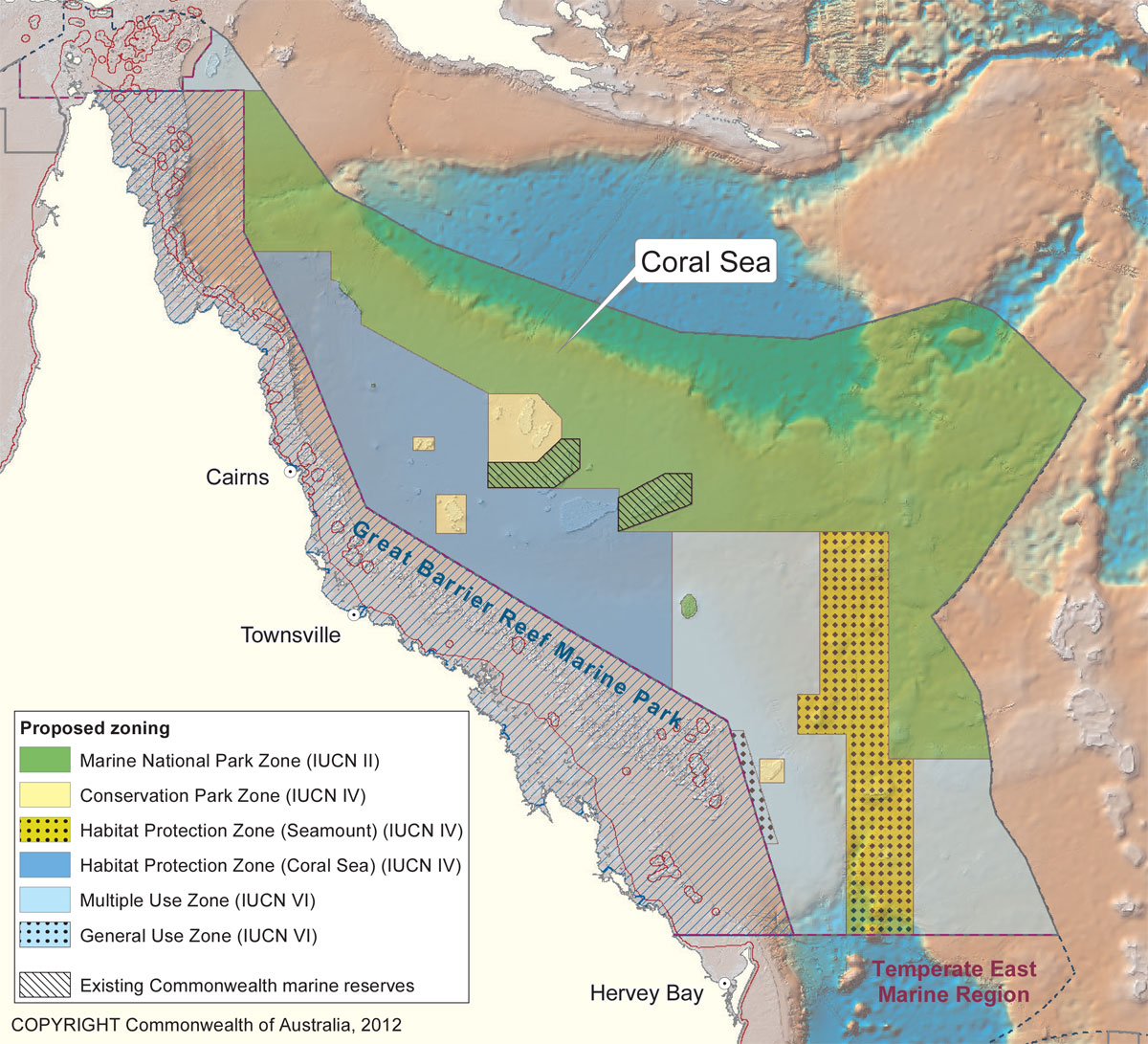
Deeply suspicious as I was about the motives of the Australian government when it announced the creation of a 3.1 million square kilometer protected marine reserve- the largest in the world, the size of India and covering a third of Australian waters - I am slowly veering to the position that the plan is, in spite of being an excellent example of crony capitalism combined with cynical and bleary logic, overall not such A Bad Thing after all.  

True, the timing of the announcement caused even my thinning eyebrows to rise. Just last month, a somewhat vituperative UN report had said that the Great Barrier Reef's UN World Heritage listing could be restated as "at risk" unless the reef was protected from the oil, gas and mining boom in Australia. The marine reserve announcement was therefore cleverly timed, stuck between the UN condemnation and the upcoming Rio summit where 130 world leaders would meet to discuss sustainable development. 

That Rio summit has now come and almost gone, leaving behind, in the words of one commentator, "the shattered remains of a slew of proposals that never got off the ground". Unsurprising, because, as Political Director of Greenpeace comments, "Governments, overall, are in the business of delaying and doing nothing."

Unsurprising, too, that the Australian marine reserve proposal drew sharp and immediate criticism. Shallow and transparent, it was said. Will be 'devastating' to local fishing communities since it restricts commercial fishing. The Australian Marine Alliance said the plan would mean a loss of $4.35bn and 36,000 jobs. (Eighty percent of the area will be open to fishing, though, and fishing communities are being promised a financial package). Another criticism harder to refute is that oil and gas exploration is being allowed near protected areas, and that 'no-go zones' seem to have been planned keeping the oil industry's interests uppermost in mind. The World Heritage Ningaloo Reef is a case in point, with the massive gas hub planned at nearby James Price Point. 

So yes, environmentalists' claims- in the words of the Guardian- that the Australian government has "deliberately created "holes" in the marine reserve network to appease the mining industry, which is pushing for a huge increase in shipping through the Great Barrier Reef to accommodate the boom in mineral exports to overseas markets, predominately China and India"- are justified. So are the apprehensions of WWF Australia, which says that areas rich in biodiversity have not been protected- like the Rowley Shoals- for the usual suspicious reasons. No doubt the oil and gas lobbyists worked overtime with the Australian government. 

All that is true. But here's the thing; see where we are coming from. Humanity has dumped nuclear and chemical waste into the oceans. Despite futile international summits, we continue to decimate nature everywhere today in pursuit of its mineral and other resources. (The Rio summit's Oceans Rescue Plan will probably go the way of other such commitments). Look at what corruption in the mining and oil exploration has done to Indian waters and shores. In Australia, coral cover has halved in the last fifty years because of bleaching and chemical run-off. Across the world, corruption equals politically sanctioned encroachment of reserves equals destruction equals junkets and seminars and sustainability summits in Rio.

The Australian proposal should be seen in this context. At a time when the rest of the world is doing precious little to slow down- leave alone reverse- our headlong dash to destruction, the Australians have increased the number of protected marine areas from 27 to 60; as I said before, the reserve will cover a third of that country's waters, including the diverse Coral Sea. All said and done, the new initiative means greater protection to Australian waters. And, while Australian environment Minister Tony Burke's statement- that he wanted the reserves to set a global benchmark for environmental protection and ensuring food security- may be taken with a dollop of salt, I have to agree with what he said later- "We have an incredible opportunity to turn the tide on protection of the oceans and Australia can lead the world in marine protection." 

So, is the Australian announcement a good start or is it just another sleight of mouth? Only time will tell, I guess. The thing is, we will probably run out of that precious commodity long before we run out of oil or ore.
.


.